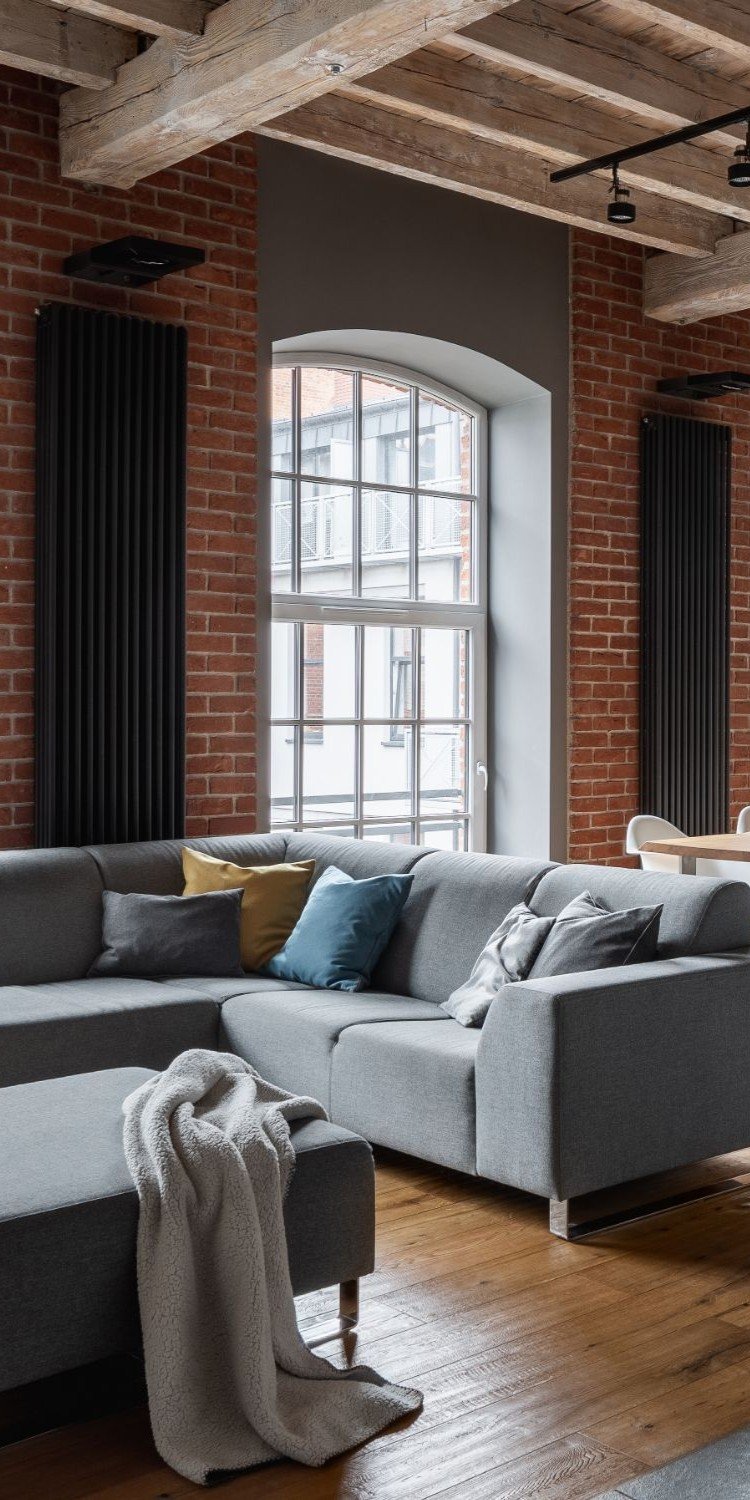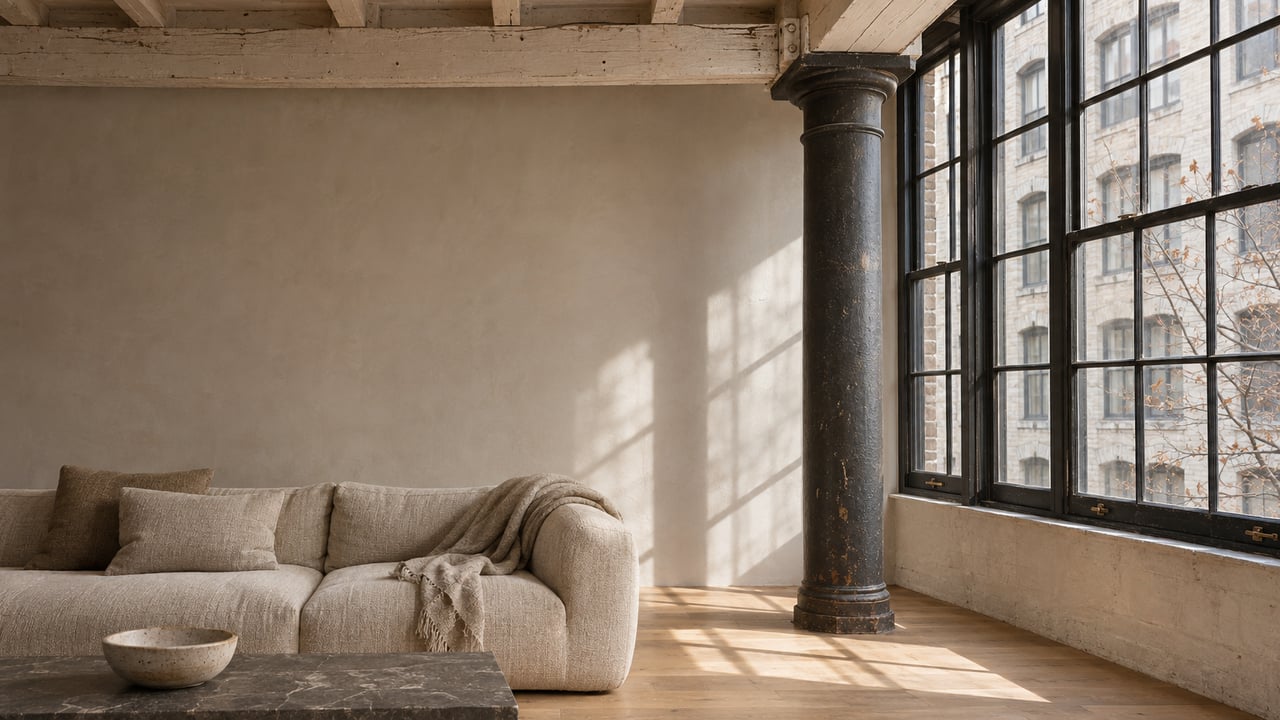
In the first week of October, two Tribeca homes went into contract a few blocks apart. One was a loft of nearly 5,000 square feet at 45 Walker Street, with a key-locked elevator opening into a 50-foot-wide living room, last asking $9.85 million. That works out to roughly $2,000 a square foot. The other was #9S, a ninth-floor corner residence at 70 Vestry Street, last asking $34 million, or $7,807 a square foot. No contract in Manhattan that week had a higher price per foot.
Both homes are in Tribeca, but per square foot one cost almost four times the other. A Tribeca buyer gets more out of knowing what kind of building a loft is in than out of knowing the neighborhood's average.
The neighborhood number describes a blend
PropertyShark's Tribeca figures for the third quarter of 2026 put the median sale at $3.7 million, up 0.5% from the same quarter a year earlier. The median price per square foot was $1,907, down 5.4% year over year, across 58 recorded sales, 18.3% fewer than in Q3 2025. Most of those 58 deals were condos, with only seven co-op sales in the quarter.
Tribeca's homes range from walk-up lofts to full-service towers, and a median built from 58 sales combines whatever mix of them happened to close in the quarter into a single number. If a few more trophy units close in one quarter and a few more walk-ups close in the next, the median moves even when no individual home's value has changed. A 5.4% drop in the median per-foot figure can mean prices fell. It can just as easily mean the quarter's sales leaned toward cheaper building types. From the median alone, a buyer can't tell which.
The wider downtown numbers point the same way. Corcoran's third-quarter 2026 report shows Downtown sales up 21% year over year and the Downtown median price up 17% to $1.7 million, while the Manhattan-wide median was $1,420 a square foot. Downtown activity rose while Tribeca's per-foot median slipped. That gap is about mix and volume, and neither figure tells a buyer what the loft on Walker Street is worth.
The price bands are set by building type
Recent Tribeca deals sort into bands by building type, and those bands are much farther apart than any quarterly move in the median. The table below combines fall 2026 contracts with sales that closed earlier in the year. Contract figures are last asking prices, because the final contract price stays private until closing. Sales from before mid-August are more than 90 days old, so they are here as comparable sales, not as a read on the current market.
| Building type | Example | Price per sq. ft. | Status and date |
|---|---|---|---|
| Walk-up or older loft | 16 Jay Street duplex, $6.64M | About $1,560 | Closed, March 2026 |
| Classic elevator loft | 45 Walker Street full floor, $9.85M ask | About $2,000 | Contract, October 2026 |
| Classic elevator loft | 61 North Moore Street #3W, $6.5M ask | About $2,230 | Contract, September 2026 |
| Classic elevator loft | Dietz Lantern Building, 429 Greenwich Street #6A, $5.25M ask | About $2,200 | Contract, September 2026 |
| Boutique doorman conversion | 140 Franklin Street, $10,202,396 | About $3,380 | Closed, May 2026 |
| Premium conversion | River Lofts, 92 Laight Street, $15.25M | About $3,490 | Closed, April 2026 |
| Premium conversion | Artisan Lofts, 143 Reade Street penthouse, $13.25M | About $3,927 | Closed, June 2026 |
| Full-service waterfront | 70 Vestry Street #9S, $34M ask | $7,807 | Contract, October 2026 |
Even the quarterly median of $1,907 is below every elevator loft in the table. The middle of the Tribeca market a buyer will actually tour, full-floor lofts in converted warehouses with elevators, sits between roughly $2,000 and $2,500 a square foot. Boutique doorman conversions start around $3,300. The top of the conversion market is a different price level altogether. At 443 Greenwich Street, a former book bindery with a 24-hour doorman, an indoor pool and underground valet parking, the penthouse sold for $39,995,000 in November 2025, about $7,440 a square foot.
Inside a single building, prices sit much closer together. Over four sales at 140 Franklin Street, an 1887 warehouse with 14 full-floor and duplex lofts, prices ranged from about $2,540 to $3,690 a square foot. At the Sterling Mason on Laight Street, four sales fell between about $2,180 and $2,640. Prices vary more from one building to the next than from one floor to the next inside the same building.
What a buyer pays for between the tiers
At 70 Vestry, a buyer pays almost four times the 45 Walker price per foot. Most of that difference pays for the building, since the interior square footage is comparable. The top tier comes with full-time staff, amenities and recent construction. The seller of #9S bought from the sponsor for $21.4 million in December 2018, and the unit's last ask before the October contract was $34 million. At 45 Walker, the money buys the loft itself: the volume, the windows and a 50-foot room, in a cast-iron building with no amenity floor.
The jump from the classic band to the boutique band works the same way on a smaller scale. A doorman, a handful of units and newer systems add more than $1,000 a square foot. In return, owners in those buildings pay higher monthly charges for staff and services. Boutique buildings with a virtual doorman or none appeal to buyers who prefer privacy and lower charges, and they reach a lower top price. A buyer deciding between bands is deciding how much of the monthly budget should go to the building and how much to the loft.
What moves a loft within its band
Once the building type sets the band, where a loft lands inside it comes down to details buyers can see on a walkthrough.
The first is ceiling height. Recent listings led with it: 61 North Moore Street, a fruit warehouse converted to condos, marketed 11-foot wood-beamed ceilings and cast-iron columns on a four-bedroom duplex. The Dietz Lantern Building at 429 Greenwich, a former factory for carriage lamps, marketed 10-foot barrel-vaulted ceilings, and residences at 140 Franklin run from 11 to more than 14 feet.
The next is light, which depends on how many sides have windows and whether the floor is high enough to clear the buildings across the street. After that comes the plan. A cast-iron column adds character in a living room, but one that lands in a bedroom or blocks a kitchen island makes the space harder to use. On a deep floor plate, interior bedrooms can end up relying on borrowed light, and buyers pay less for those rooms.
Then there are features few Tribeca lofts have. A key-locked elevator that opens into the apartment marks one of the clearest price breaks, and each flight of stairs in a walk-up shrinks the pool of buyers. Private outdoor space and deeded parking are both uncommon. The 429 Greenwich listing included an in-building parking space.
The 16 Jay Street duplex shows how these details add up. It has beamed ceilings and exposed brick, and it closed in March at about $1,560 a square foot, well below the elevator lofts a few blocks south.
Where this fall's contracts landed
In one early-fall week, three of Tribeca's four biggest contracts were in converted warehouses and factories. During the week of August 31 to September 6, the quietest contract week of 2026 so far in Manhattan, Tribeca accounted for four of the borough's ten most expensive contracts. They were 61 North Moore #3W at $6.5 million, the converted-warehouse co-op at 16 Hudson Street, where penthouse #6A asked $5.65 million, the Dietz Lantern Building #6A at $5.25 million, and #520 at 450 Washington Street, asking just under $5 million. 450 Washington was built as a rental in 2009, and Related Companies converted it to condos in 2022. A month later, during the week Crain's reported the $34 million 70 Vestry contract as the top luxury deal, Tribeca led Manhattan in contract dollar volume at $63 million.
New construction is also limited. Corcoran counted 564 sponsor listings across Manhattan in the third quarter, down 22% from a year earlier. In Tribeca, the largest new project in the pipeline is the conversion at 101 Franklin and 250 Church, planned as 72 units in a 21-story building. Tribeca Citizen reported on November 6 that it is under construction through 2028. For the next couple of years, most of what Tribeca buyers can choose from will be existing lofts and resales in established buildings.
Pricing a Tribeca loft against its own building type
Price a listing against the right comparison set. Compare a full-floor elevator loft on Walker Street with 61 North Moore and the Dietz Lantern Building, not with 70 Vestry and not with the quarterly median. A walk-up should be priced against other walk-ups. A boutique doorman conversion should be priced against 140 Franklin and River Lofts. Within that set, ceiling height, exposure, column placement and elevator access explain most of the remaining spread.
In a co-op, the building's terms affect how many buyers can purchase there. Board financial requirements, flip taxes and sublet policies differ from building to building, and they can change a loft's resale price even when the space itself is comparable. 16 Hudson Street is one of the converted-warehouse co-ops in this fall's top contracts, so the co-op tier is active, but buyers should check each building's terms before comparing prices. Our Tribeca neighborhood guide and our earlier look at Tribeca and SoHo lofts for investors cover building types in more detail.
FAQ
What is the median price per square foot in Tribeca right now? PropertyShark put it at $1,907 for the third quarter of 2026, down 5.4% year over year, based on 58 sales. Elevator lofts in converted warehouses that went into contract this fall were asking roughly $2,000 to $2,500 a square foot.
Do Tribeca loft sellers get close to their asking price? Results in 2026 varied by building. River Lofts closed 4.7% below its last ask in April, and a top-floor penthouse at 152 Franklin Street closed 3.2% above its asking price in February. The Artisan Lofts penthouse at 143 Reade Street closed at $13.25 million against a $14.9 million last ask.
Is new construction coming to Tribeca? The conversion at 101 Franklin and 250 Church is planned as 72 units and is under construction through 2028, according to Tribeca Citizen.
If you are comparing lofts in two different Tribeca buildings, or wondering which band your own loft falls in, Varun Sharma and The Johnny Lal Team can pull recent sales for each building and its type and go through them with you. For owners, our home valuation starts from those same building-level comparisons. Get in touch.