In October 2025, a construction firm called J.T. Magen & Company paid $10.25 million for a five-story walk-up at 80 Horatio Street, tucked between Greenwich Street and Washington Street in the West Village. The building had stayed in the same family for nearly fifty years, since 1976. The plan was straightforward on paper: take the eight-unit building and turn it into a single 63-foot-tall single-family home, with a rebuilt rear facade, a rooftop addition, and an excavated cellar.
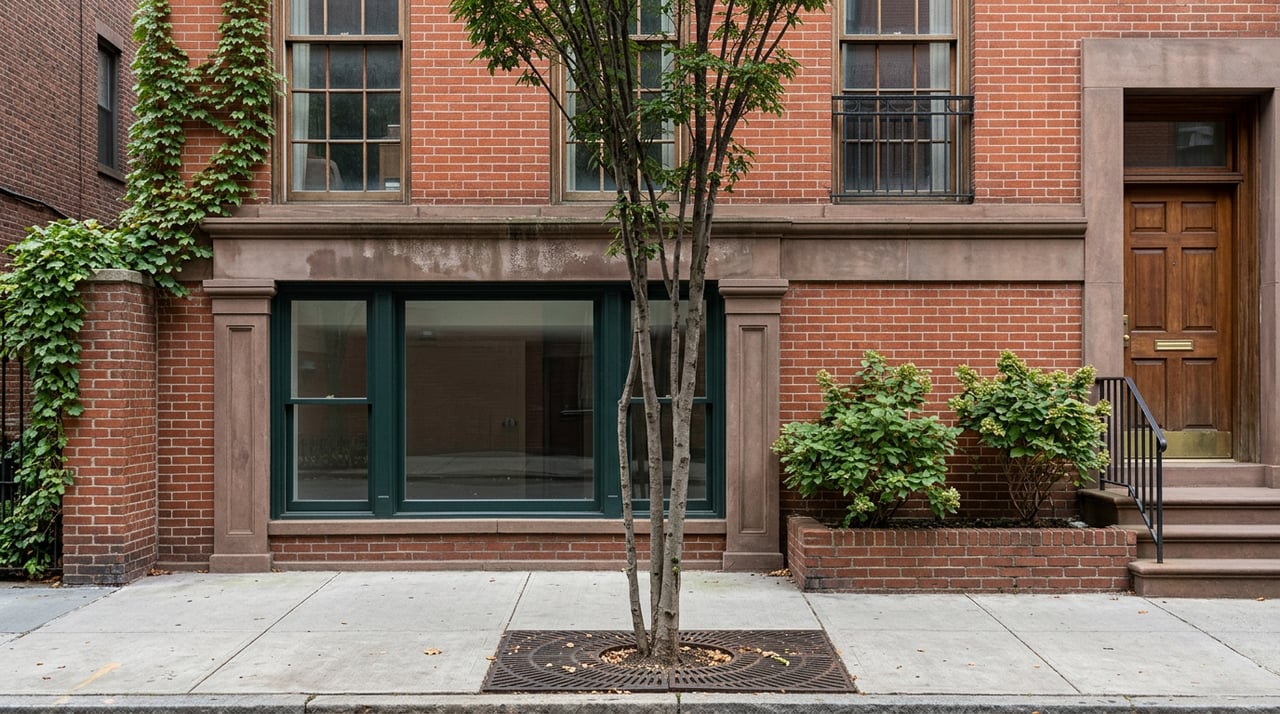
When the Landmarks Preservation Commission took up the application on August 4, 2026, commissioners endorsed the rear elevation. They endorsed the rooftop addition. They endorsed the excavation. Then they stopped. The one piece of the project they couldn't agree on was a ground-floor storefront, installed in 1909, on a building that dates to 1853. That storefront isn't even original to the structure. Commissioners split over whether it should stay or go, and the application went back to the drawing board. A revised version returns to the commission on September 1, 2026, according to the LPC's own public hearing calendar.
If you're eyeing a landmarked property in the West Village and picturing a renovation timeline, this is the case worth sitting with. The parts of the 80 Horatio project that sound dramatic, a rooftop addition, cellar excavation, a full facade rebuild, cleared the commission without a fight. The part that stalled it was a modest storefront nobody was especially attached to, added six decades after the building went up. Scope isn't what determines your timeline. Visibility and ambiguity are.
What sailed through, and why it matters
The Landmarks Preservation Commission reviews changes based on what's visible from the street, not on how big the change is in square footage or cost. A rear elevation rebuild, even a significant one, can move quickly if it doesn't read as a departure from the building's established character and doesn't draw outside interest. That's largely what happened at 80 Horatio: the rear work, the rooftop addition, and the cellar excavation all got a green light in the same sitting.
The storefront was different because it raised a genuine interpretive question. It wasn't part of the 1853 building. It was added later, during a 1909 alteration, which means it carries some history of its own even though it isn't "original." Preservation groups, including Victorian Society New York, submitted testimony on the application, a sign of how much attention a seemingly minor architectural element can draw once it becomes a symbol of the building's mixed-use past. Manhattan Community Board 2 had already recommended approval with modifications back in June, but a community board recommendation doesn't bind the commission. The revised plan now on the table tries to split the difference, working in an echo of the storefront rather than eliminating it outright.
The two tracks, and the gap between them
Every landmarked property in the West Village runs through one of two review tracks once you propose an exterior change, and the gap between them is the single biggest scheduling risk in a renovation budget.
| Review type | What triggers it | Typical timeline in 2026 |
|---|---|---|
| Certificate of No Effect | In-kind repairs or replacements that don't change what's visible from the street: matching window replicas, masonry repair with the same materials | Roughly 2 to 8 weeks |
| Certificate of Appropriateness, staff-level | Minor visible changes that don't require a public hearing | Several weeks to a couple of months |
| Certificate of Appropriateness, public hearing | Rooftop additions, facade alterations, removal or modification of features like a storefront, anything that changes the building's visible character | 3 to 9 months or more, longer if the commission asks for revisions |
Eighty Horatio Street landed in that bottom row. The application first went before Community Board 2 in June, sat in front of the full commission on August 4 with no resolution, and returns for another hearing on September 1. That's roughly three months and counting, on a project where most of the scope was never in dispute. If the commission asks for further changes on September 1, the clock keeps running.
Budget the calendar, not just the contractor
A contractor's estimate tells you how long the physical work will take once permits are in hand. It says nothing about how long it takes to get there. For a buyer under contract on a landmarked West Village property with renovation plans, the Landmarks review sits ahead of the Department of Buildings permit, which sits ahead of the actual build. If your project is a kitchen and bath refresh that doesn't touch anything visible from the street, none of this affects you. If it involves a facade, a rooftop, or a storefront with any ambiguity about its history, plan for the possibility that Landmarks review alone could run longer than your rate lock, longer than a typical bridge loan term, and well past whatever move-in date felt reasonable when you signed the contract.
This isn't a reason to avoid landmarked property. It's a reason to price the timeline into the offer the same way you'd price in a known repair. A buyer who assumes a 6-to-8-week renovation window on a project that actually needs a Certificate of Appropriateness hearing is the same buyer who ends up paying for temporary housing they didn't budget for.
Questions to ask before you write an offer
A few minutes of diligence before you bid can save months later.
- Ask the seller's agent whether any prior LPC filings exist for the address, and whether any are still open or unresolved.
- Ask specifically about non-original elements: storefronts, later additions, altered stoops. These are the details most likely to draw commission scrutiny even when they aren't part of the building's earliest fabric.
- Find out whether the seller's architect has already had a pre-application conversation with LPC staff. A building with that groundwork laid moves faster than one starting from zero.
- Check whether Manhattan Community Board 2 has weighed in on the property. A board recommendation isn't binding, but it signals how contested the project is likely to be.
- Before waiving any inspection or due diligence contingency, confirm in writing whether your planned scope falls under a Certificate of No Effect or requires a full Certificate of Appropriateness hearing. That single distinction is the difference between weeks and months.
The Greenwich Village Historic District, which covers the West Village, was designated on April 29, 1969, and protects more than 2,000 buildings across 65 blocks. That scale is part of what makes the neighborhood look the way it does. It's also why almost no exterior renovation here happens without some version of this review, and why the specific history of your building, not just its condition, shapes how long that review takes.
FAQ
Does landmark status cover the whole building, or just what you can see from the street? Mostly the latter. The commission's authority is tied to features visible from a public way: facades, rooflines, storefronts, stoops, cornices. Interior work generally falls outside LPC review unless the interior itself carries a separate designation, which is rare for private residences.
Can I still renovate a kitchen or bathroom in a landmarked West Village building without going through Landmarks? Usually, yes. Interior renovations that don't require a visible exterior change, like a new vent or altered window opening, typically proceed through standard Department of Buildings permits without LPC involvement.
What happens when a hearing doesn't resolve anything, like at 80 Horatio Street? The application returns with a revised proposal for another hearing. There's no fixed cap on how many rounds this can take. Each round adds weeks or months, which is exactly what turned an August 4 meeting into a September 1 follow-up with no guaranteed outcome.
If you're weighing an offer on a West Village property with renovation plans already in mind, the building's history matters as much as its listing photos. Varun Sharma and the team spend a lot of time in Landmarks filings and Community Board 2 minutes precisely because that groundwork changes what a fair offer looks like. Get in touch before you write one.