Trying to decide between Greenwich Village and the West Village? You’re not alone. Both offer historic charm, strong walkability, and a true downtown lifestyle, but the feel, housing mix, and buying experience can differ block to block. In this guide, you’ll compare streetscapes, co-ops vs condos, lifestyle trade-offs, and how to research current prices and inventory. Let’s dive in.
Quick neighborhood snapshot
How locals define each
You’ll hear New Yorkers refer to the West Village as a distinct neighborhood inside the broader Greenwich Village. In practice, the West Village runs roughly from West 14th Street to Houston Street and from the Hudson River to about Sixth or Seventh Avenue. Definitions vary by map and listing site, so keep your boundaries consistent when you compare options.
Greenwich Village covers a larger footprint, including the West Village and areas farther east with a wider mix of building types and institutions. Historic district boundaries for both areas are formally recognized by the New York City Landmarks Preservation Commission. You can review official designation reports and maps through the Landmarks Commission’s designation portal for context on protected streetscapes and buildings.
- Explore historic district documentation: NYC Landmarks Preservation Commission designation reports
Streetscape and landmark context
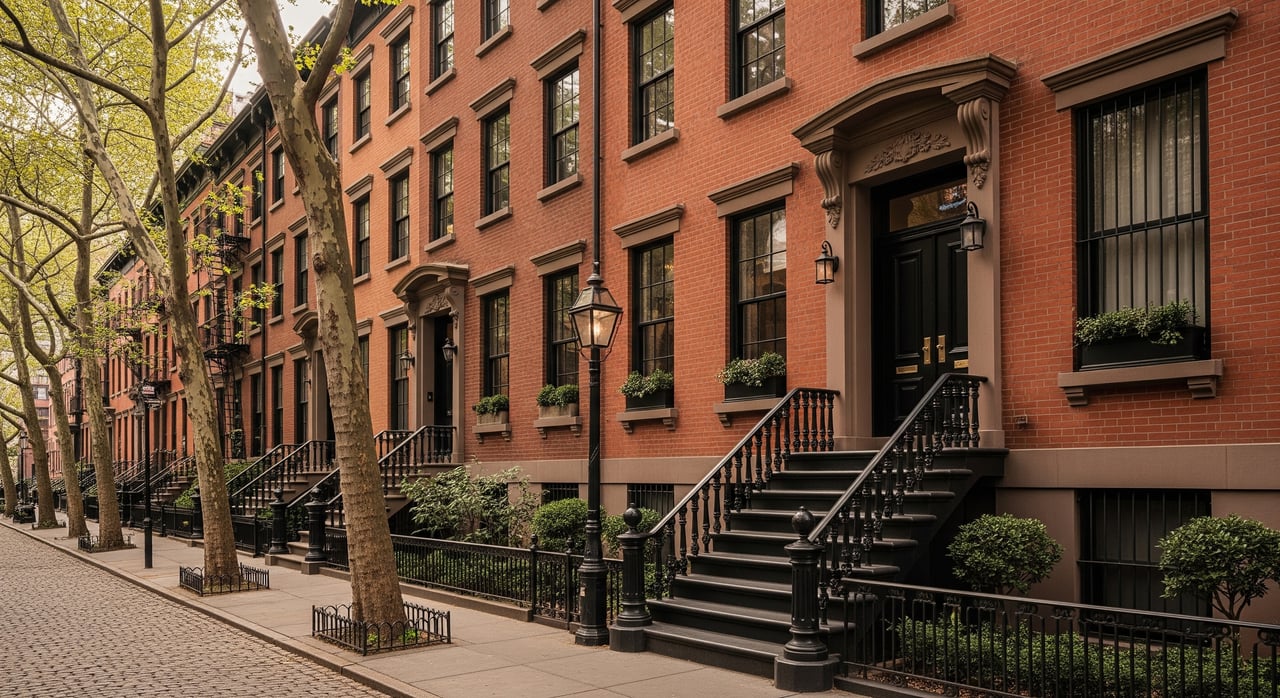
The West Village is known for narrow, irregular streets that predate the Manhattan grid, low-rise brownstones, and landmarked blocks with a strong townhouse and stoop presence. The broader Greenwich Village blends that character with larger apartment houses, mixed-use buildings, and institutional anchors such as campuses and cultural venues.
Large portions of both neighborhoods are landmarked. That matters if you plan to renovate, since exterior changes and certain alterations require approvals. Understanding these rules early can help you budget time and cost realistically.
Housing and ownership: what you’ll find
Co-ops dominate prewar buildings
Many prewar walk-ups and elevator buildings in both neighborhoods were converted to co-ops in the mid-20th century. Co-ops remain common across both areas, especially in classic apartment houses and smaller prewar buildings. Expect a board package, financial review, and house rules to be part of the process.
Where condos cluster
Condominiums tend to appear in newer construction, converted lofts, or along redevelopment corridors. In the West Village you’ll see boutique condo conversions and select newer buildings. In the wider Greenwich Village, you’ll find more mid- and high-rise condo options along major avenues and near institutional corridors.
Townhouses: scarce and special
Townhouses are a defining feature of the West Village streetscape. They are limited in supply and often carry a premium because of their privacy, historic details, and human-scale blocks. In Greenwich Village more broadly, you’ll see a mix of townhouses and larger buildings, which can widen your search range and price points.
Co-op vs condo: what it means for you
Understanding ownership types helps you match your lifestyle and financing to the right buildings.
Ownership structure
- Co-op: You purchase shares in a corporation and receive a proprietary lease. A board reviews your application and can approve or deny. Policies vary by building.
- Condo: You receive a deed to real property. Boards typically focus on basic right-of-first-refusal procedures and building rules.
Financing and down payment
- Co-op: Expect higher down payment requirements. Many buildings look for 20 to 30 percent for primary residences, and some expect 25 to 50 percent for investors or non-primary use.
- Condo: Financing is generally more flexible since you own real property. Down payments vary by lender and building.
Monthly costs
- Co-op: Monthly maintenance often includes building operations, property taxes, heat and hot water, and in some cases an underlying mortgage. Compare the all-in number.
- Condo: You pay common charges plus your own property taxes. Compare total monthly cost across both ownership types.
Policies and timelines
- Co-op: Boards can regulate subletting, pets, and renovations. Expect a longer approval timeline due to board review.
- Condo: Rules are usually more flexible, and closings tend to be faster.
For a plain-language overview of buyer protections and offering plans, review the New York State Attorney General’s Real Estate Finance Bureau.
Price signals and inventory: how to research live data
Qualitatively, the West Village often trades at a premium because of scarce inventory and landmarked, low-rise character. The broader Greenwich Village spans more building types and blocks, which can open up a wider range of price points. Inventory can be tighter in the West Village due to lower turnover and townhouse ownership patterns.
When you’re ready to compare homes, use a consistent research workflow:
- Define your map boundaries. Keep the same West Village and Greenwich Village borders when you pull comps.
- Filter by ownership (co-op vs condo), building type, size, and renovation level.
- Focus on closed sales, not just asking prices, to see what buyers actually paid. Use 6 to 12 months of recent data where available.
- Treat price per square foot with care. Prewar layouts and irregular floor plans can make PSF less reliable than apples-to-apples unit comparisons.
Helpful primary sources for closed sales and market context:
- Citywide closed sales data: NYC Department of Finance property sales
- Industry research and market commentary: REBNY research and reports
Everyday living and access
Walkability and transit
Both neighborhoods are highly walkable with strong subway access nearby. Most daily errands can be done on foot. To see current walk, transit, and bike scores, check neighborhood pages on Walk Score:
- West Village: Walk Score neighborhood overview
- Greenwich Village: Walk Score neighborhood overview
Parks and open space
You’ll find Hudson River Park and its waterfront esplanades along the western edge, which is a major draw for many West Village addresses. Washington Square Park anchors central Greenwich Village. Smaller pocket parks and playgrounds are distributed throughout both areas.
Culture, dining, and nightlife
The West Village leans into smaller-scale retail, cafes, and destination dining on quieter, irregular blocks. Greenwich Village’s larger footprint includes cultural venues, theaters, and a broader mix of retail tied to nearby institutions. The scene can shift quickly from block to block, so plan daytime and evening visits to compare activity levels.
Which neighborhood fits? Decision guide
Ask yourself a few key questions to narrow your focus:
- Do you prefer narrow, low-rise, townhouse-lined streets or a broader mix of buildings and services?
- Is co-op or condo a better fit for your financing, subletting needs, and renovation plans?
- Do you want to be closer to Hudson River Park or Washington Square Park?
- How quickly do you need to close, and how comfortable are you with a co-op board process?
Buyer checklist you can use today
- Ownership type: Confirm co-op, condo, or townhouse. Obtain the offering plan (condo) or review the proprietary lease and bylaws (co-op) where available.
- Monthly carrying cost: Compare the total number, not just the line items. Include mortgage, taxes, and building charges.
- Board and house rules: Look at subletting, pets, renovation approvals, and interview expectations.
- Financing: Verify lender options for your down payment level and confirm if a co-op has underlying debt that affects maintenance.
- Physical condition: Ask about upcoming capital projects, facade work, roof repairs, and potential assessments.
- Micro-location: Visit at different times to assess light, street activity, noise, and proximity to transit and groceries.
- Comparable sales: Pull closed sales for the building and nearby blocks from the last 6 to 12 months.
Renovations and landmarks: plan ahead
If your target building or block is in a historic district, exterior work and some alterations will require approvals. Understanding what is permissible can save you time and help avoid delays. Review designation maps and reports through the NYC Landmarks Preservation Commission to see how preservation rules might apply to your property search.
Work with a downtown team that knows the boards
Choosing between Greenwich Village and the West Village comes down to how you want to live, which buildings fit your plan, and how you want to navigate co-op or condo processes. You’ll move faster and with more confidence when you have a team that understands building-level nuances and board expectations.
If you’re ready to compare options, prep a board-ready package, or price a sale, connect with The Johnny Lal Team for pragmatic, local guidance.
FAQs
What is the key lifestyle difference between Greenwich Village and the West Village?
- The West Village tends to feature narrower, low-rise, townhouse-lined blocks with a quieter, small-scale feel, while the broader Greenwich Village mixes that charm with larger buildings, more through-streets, and cultural institutions.
How do co-op board approvals in Manhattan affect my timeline?
- Co-op purchases typically take longer due to detailed board packages, financial review, and potential interviews. Condos usually close faster with fewer approval steps.
Where can I find closed sales data to compare prices?
- Use primary sources like the NYC Department of Finance property sales and industry research from REBNY to see what buyers actually paid.
Are renovations harder in landmarked parts of the Village?
- Landmark protections guide what changes are allowed, especially for exteriors. Review the Landmarks Commission’s designation materials and plan for additional approvals.
Is one neighborhood more walkable or transit-friendly than the other?
- Both rate highly for walkability and transit access. Compare locations using neighborhood snapshots on Walk Score for West Village and Walk Score for Greenwich Village.